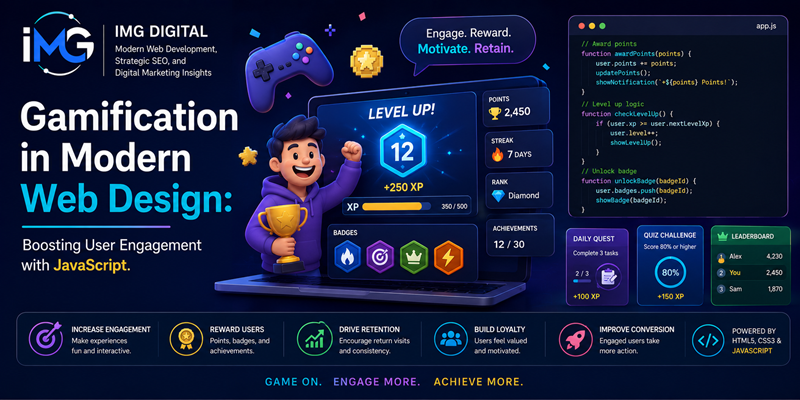
Gamification in Modern Web Design: Boosting User Engagement with JavaScript – Modern digital audiences expect web applications to offer more than static informational content. However, traditional layout designs often struggle to retain user attention across competitive online markets. As a result, web designers increasingly integrate game-thinking mechanics into everyday user interfaces.
Gamification in Modern Web Design: Boosting User Engagement with JavaScript
Specifically, gamification applies game design principles—such as progress bars, interactive rewards, badges, and feedback loops—to non-game web environments. Furthermore, JavaScript acts as the foundational engine that powers these dynamic, interactive behaviors. Therefore, understanding how to implement gamification using lightweight JavaScript is essential for boosting overall user engagement.
The Core Psychology Behind Web Gamification
Gamification succeeds because it aligns directly with basic human psychology. Specifically, people possess an innate desire for achievement, recognition, and structural progression. When web platforms reward users for completing specific actions, the brain creates a positive emotional association with the site.
For example, simple feedback loops—such as completing a user profile or unlocking a feature badge—encourage visitors to stay longer on a platform. Consequently, key business metrics, including session duration and conversion rates, improve significantly. However, effective gamification must remain purposeful. If interactive elements become overly distracting or intrusive, users may feel overwhelmed. Therefore, front-end developers must balance playful design elements with clean, goal-oriented user experience principles.
Core JavaScript Techniques for Gamified Interfaces
Building gamified web experiences requires responsive, stateful client-side logic. Fortunately, modern JavaScript provides native APIs to create dynamic interactions without relying on heavy third-party software.
1. State Management and Progress Tracking
Gamification relies heavily on tracking user progression across a session. By using local state variables or browser localStorage, JavaScript remembers user achievements even when pages reload. As a result, users experience continuous progression.
2. Event-Driven Animations and Micro-Interactions
When a user accomplishes a task, immediate visual feedback is essential. Using JavaScript event listeners alongside CSS class toggles allows developers to trigger subtle animations, such as confetti bursts or rising point counters.
JavaScript
/* Simple Achievement Trigger */
function unlockBadge(badgeElement) {
  badgeElement.classList.add('unlocked');
  badgeElement.setAttribute('aria-hidden', 'false');
  updateUserScore(100);
}
As shown in this snippet, lightweight event handlers update visual components instantly, reinforcing positive user actions.
Real-World Applications and Interactive Case Studies
Interactive gamification techniques span across various digital sectors, ranging from e-learning applications to digital heritage platforms. For instance, online gaming portals rely extensively on dynamic JavaScript interfaces to render real-time leaderboards, interactive achievement trees, and personalized user dashboards.
In addition, cultural and interactive media initiatives utilize gamified web architectures to engage global audiences. For example, platforms like SLOT GACOR 1MPO demonstrate how digital interactive platforms leverage web technologies to engage visitors, preserve media legacy, and encourage community participation. By incorporating interactive mechanics, such platforms transform passive readers into active participants, ensuring higher content retention and prolonged session activity.
Best Practices for Performance and Accessibility
While gamification enhances user engagement, front-end engineers must prioritize technical performance and universal accessibility. Otherwise, complex visual elements may degrade loading speeds.
-
Optimize JavaScript Execution: Heavy script execution can stall the main browser thread. Therefore, developers should optimize event listeners, defer non-critical scripts, and use
requestAnimationFramefor fluid animations. As a result, interaction lag remains minimal. -
Ensure Screen Reader Accessibility: Gamified elements, such as progress bars and achievement popups, must include proper ARIA attributes. Consequently, screen reader users can navigate interactive rewards seamlessly.
-
Avoid Gimmicky Over-Engineering: Gamification should support core user goals rather than create arbitrary friction. Specifically, every interactive element must serve a clear operational purpose.
Summary
In conclusion, gamification in modern web design represents a powerful strategy for driving user engagement and audience retention. By leveraging clean JavaScript logic, web developers turn static layouts into interactive, rewarding digital experiences. Furthermore, balancing playful interactions with fast rendering speeds and screen accessibility guarantees a superior user experience. Ultimately, mastering native JavaScript gamification techniques allows engineering teams to build memorable, high-performing web applications that stand out in today’s competitive digital ecosystem.