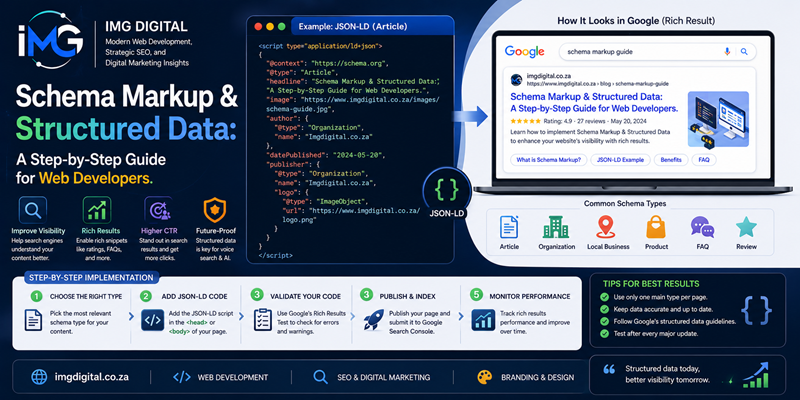
Schema Markup & Structured Data: A Step-by-Step Guide for Web Developers – Modern search engines rely on structured context to interpret web page content effectively. In the past, search crawlers analyzed plain HTML text to guess page context. However, modern search algorithms require explicit machine-readable data to render rich snippets and conversational search results.
Schema Markup & Structured Data: A Step-by-Step Guide for Web Developers
Specifically, structured data provides a standardized vocabulary known as Schema.org. By implementing Schema markup, developers translate human-readable content into structured machine data. Consequently, web applications communicate their exact context directly to search engines. Therefore, this step-by-step guide explores how web developers can implement Schema markup effectively using JSON-LD.
Understanding JSON-LD versus Legacy Formats
To implement structured data successfully, developers must choose the correct markup format. Historically, web developers integrated structured data using Microdata or RDFa formats. However, these legacy formats required nesting attributes directly inside visual HTML tags. As a result, code maintenance became difficult, and codebases often suffered from structural syntax errors during layout updates.
Conversely, Google explicitly recommends JavaScript Object Notation for Linked Data (JSON-LD). Because JSON-LD separates structured data from visual HTML components, developers write clean, maintainable code block scripts. Specifically, JSON-LD scripts sit inside the <head> or <body> elements without affecting frontend UI styling. In addition, developers can generate JSON-LD dynamically using backend templates or frontend JavaScript frameworks. Therefore, JSON-LD represents the modern industry standard for structured data implementation.
A Step-by-Step Implementation Guide for Developers
Implementing structured data requires a methodical engineering approach. Below, a four-step development workflow illustrates how to integrate JSON-LD schema into modern web applications.
Step 1: Select the Appropriate Schema Type
First, developers must visit Schema.org to identify the specific vocabulary matching their content domain. For example, e-commerce platforms utilize Product and Offer schema, while corporate websites deploy Organization or LocalBusiness types. In addition, publishing platforms utilize Article or TechArticle classifications. Consequently, choosing the precise entity type ensures search engines parse your data accurately without ambiguity.
Step 2: Construct the JSON-LD Script Structure
Second, developers must construct the JSON-LD code payload using standard key-value pairs. Specifically, every JSON-LD script must include the @context and @type declarations to establish its vocabulary foundation.
HTML
<script type="application/ld+json">
{
  "@context": "https://schema.org",
  "@type": "Article",
  "headline": "Schema Markup & Structured Data Guide",
  "author": {
    "@type": "Organization",
    "name": "Imgdigital"
  },
  "publisher": {
    "@type": "Organization",
    "name": "Imgdigital"
  }
}
</script>
As shown in this code snippet, this structured script defines primary entity attributes clearly without altering visual page elements. Furthermore, nested objects—such as author and publisher entities—provide deeper relational context to search crawlers.
Step 3: Inject Dynamic Schema in Web Applications
Third, developers must integrate structured data scripts into their web application architecture. When building single-page applications (SPAs) with React, Vue, or Next.js, developers can render dynamic JSON-LD scripts server-side or inject them into document head components. For instance, utilizing head-management libraries allows dynamic property updates based on state changes. Consequently, search crawlers receive rendered structured data immediately upon initial page requests.
Step 4: Validate and Test Code Syntax
Fourth, comprehensive code validation is crucial before deploying schema scripts to production servers. Specifically, developers should test their JSON-LD payload using Google’s Rich Results Test and the Schema.org Validator. If syntax errors, missing commas, or unpopulated fields occur, these testing tools highlight exact line issues instantly. As a result, developers fix markup errors early, ensuring smooth search engine indexation. Understanding Web Link Architecture: How Internal and Outbound Links Impact Search Authority
Adhering to Google Guidelines and Avoiding Pitfalls
While implementing Schema markup offers significant technical SEO advantages, developers must adhere strictly to Google search quality guidelines.
-
Avoid Misleading or Hidden Schema: Specifically, never markup content that is hidden from human visitors. If structured data describes features, user reviews, or prices not visible on the webpage, search engines may issue manual spam penalties.
-
Ensure Entity Relevance: In addition, always apply the most specific Schema type available. For instance, use
TechArticleinstead of genericCreativeWorkwhen documenting software architectures. Consequently, search algorithms understand the exact domain context. -
Keep Dynamic Data Updated: Furthermore, dynamic content—such as product stock levels, event dates, or pricing changes—must update in real time. Consequently, search crawlers display accurate snippet information to prospective users.
Summary
In conclusion, implementing Schema markup and structured data is a critical technical skill for modern front-end and full-stack web developers. By leveraging JSON-LD scripts, following Schema.org standards, and verifying syntax through validation tools, engineering teams elevate site visibility. Furthermore, clean structured data helps websites earn eye-catching rich snippets, knowledge graph placements, and voice search results. Ultimately, mastering structured data engineering guarantees that your web application remains fully visible, authoritative, and competitive across modern AI-driven search engines.