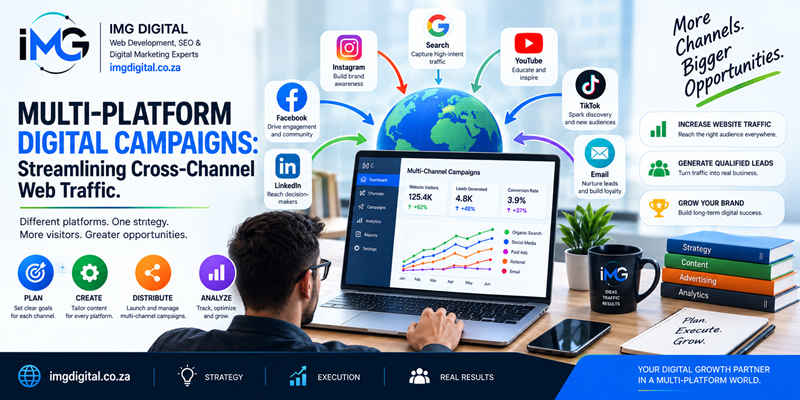
Multi-Platform Digital Campaigns: Streamlining Cross-Channel Web Traffic – Modern consumer purchasing journeys rarely occur on a single digital channel. In the past, marketing teams launched isolated campaigns across individual platforms without coordinating user messaging. However, today’s online audiences switch fluidly between social media networks, search engines, video platforms, and email newsletters.
Multi-Platform Digital Campaigns: Streamlining Cross-Channel Web Traffic
Consequently, fragmented marketing campaigns cause inconsistent user experiences and diluted brand attribution. Specifically, when web traffic arrives from disparate sources without central coordination, conversion rates suffer significantly. Therefore, executing multi-platform digital campaigns that streamline cross-channel web traffic is essential for maximizing return on marketing investment.
Building a Unified Cross-Channel Campaign Framework
Streamlining multi-platform traffic requires constructing a cohesive architectural foundation. If user journeys lack structural consistency across touchpoints, prospective leads drop out of marketing funnels prematurely.
1. Standardizing Campaign Tracking and UTM Governance
To capture clean marketing analytics, organizations must establish strict Universal Tracking Module (UTM) governance. Specifically, every campaign link across paid search, organic social, and email newsletters must follow standardized parameter conventions. For instance, using consistent lower_snake_case naming for campaign source, medium, and term parameters prevents fragmented reporting in analytics dashboards. As a result, marketing teams isolate high-performing channels effortlessly while eliminating data tracking errors.
2. Engineering Dedicated Cross-Channel Landing Pages
In addition, sending traffic from diverse marketing platforms to a single generic homepage damages conversion efficiency. Because user intent varies by source platform, landing pages must reflect original campaign context. For example, visitors arriving from high-intent Google search ads seek immediate technical specifications, whereas users coming from discovery-driven social ads prefer visual overview content. Consequently, deploying modular, context-aware landing pages ensures smooth user transitions from ad click to final conversion.
Strategic Channel Alignment across the Marketing Funnel
Maximizing campaign ROI requires aligning each digital marketing channel with its optimal role within the user decision pathway.
| Channel Type | Primary Audience Intent | Strategic Campaign Role | Core Performance Metric |
| Paid Search (SEM) | High commercial intent | Capturing active demand & immediate leads | Cost Per Acquisition (CPA) |
| Paid Social Ads | Visual interest & discovery | Top-of-funnel awareness & retargeting | Click-Through Rate (CTR) |
| Email Marketing | Nurturing & direct engagement | Middle-of-funnel education & retention | Conversion & Repeat Rate |
| Display & Video Ads | Brand recall & engagement | Retargeting & cross-platform touchpoints | Return on Ad Spend (ROAS) |
On the one hand, top-of-funnel platforms like social media build initial brand awareness among prospective buyers. On the other hand, bottom-of-funnel channels like paid search capture users who are actively seeking immediate solutions. Furthermore, email marketing nurtures mid-funnel leads who require technical validation before making purchasing decisions. Consequently, orchestrating these channels into an integrated ecosystem accelerates movement through the sales pipeline.
Data Integration and Multi-Touch Attribution Modeling
Managing multi-platform digital campaigns LINK MPO ALTERNATIF effectively requires moving beyond single-touch attribution models. When organizations rely on last-click attribution, earlier channel touchpoints appear underperforming, leading to flawed budget allocation decisions.
1. Implementing First-Party Data Collection
Because third-party browser cookies are being phased out globally, capturing first-party data is critical. By utilizing custom event tracking and server-side tag management, organizations collect privacy-compliant user interaction data directly. In addition, integrating customer relationship management (CRM) systems with Google Analytics 4 ensures complete end-to-end user visibility. As a result, marketing teams track entire customer lifecycles across all digital channels accurately.
2. Deploying Data-Driven Attribution Frameworks
Furthermore, leveraging data-driven attribution models inside GA4 distributes conversion credit algorithmically across all channel interactions. Specifically, machine-learning algorithms evaluate how various cross-channel touchpoints influence final conversion decisions. Consequently, growth teams reallocate marketing budgets toward channels that deliver true incremental value rather than vanity metrics.
Continuous Testing and Optimization Workflows
Maintaining streamlined cross-channel performance demands continuous experimentation and technical refinement. Over time, ad fatigue occurs, audience behaviors shift, and channel costs fluctuate.
-
Execute Cross-Platform A/B Testing: Regularly test ad creative variations, landing page layouts, and messaging hooks across platforms simultaneously. Consequently, top-performing assets are identified and scaled rapidly.
-
Monitor Cross-Channel Frequency: In addition, cap ad exposure frequency across display and social networks. Because excessive ad repetition annoys prospects, frequency capping prevents ad fatigue while preserving marketing budget.
-
Automate Dynamic Audience Syndication: Finally, synchronize CRM customer segments with advertising platforms in real time. As a result, converted leads are excluded from awareness campaigns instantly, reducing wasted ad spend.
Summary
In conclusion, executing multi-platform digital campaigns is essential for converting fragmented web traffic into predictable business growth. By establishing strict UTM tracking standards, engineering context-aware landing pages, aligning funnel channels, and deploying data-driven attribution, organizations maximize marketing efficiency. Furthermore, continuous cross-platform testing ensures long-term ad performance and higher return on investment. Ultimately, unifying cross-channel web traffic empowers digital businesses to build seamless user journeys, strengthen brand authority, and achieve sustainable competitive advantage.